I Tackled 100 Days of School Laser Svg Review
First Impressions: Translating Vector Lines to Stitch
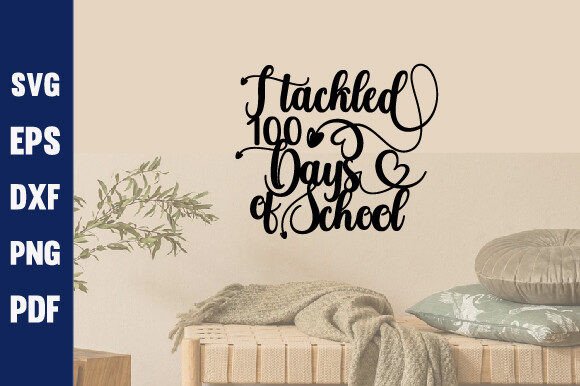
As a designer who regularly bridges the gap between digital graphics and tangible textiles, I approach every new file with a specific question: will this actually work in thread? When I first opened the I Tackled 100 Days of School Laser Svg, my immediate assessment was focused on its structural integrity. Originally marketed as a vector file for laser cutting, engraving, and CNC router machines, this design possesses clean, continuous lines that are often superior to standard raster images for digitizing. For those of us in the Crafts category looking for versatile Graphics, this distinction matters significantly.
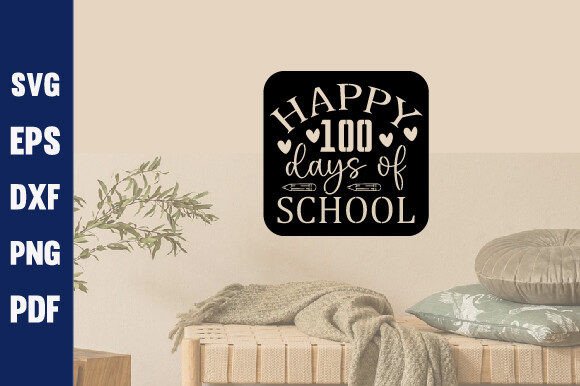
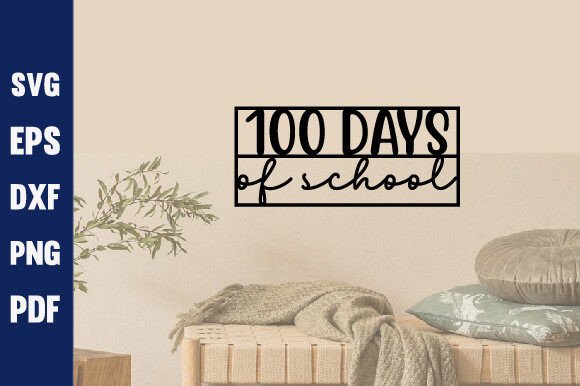
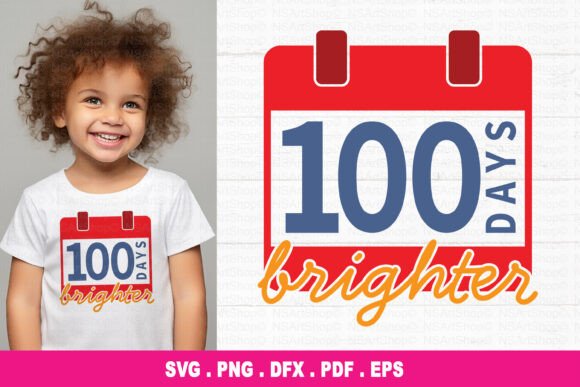
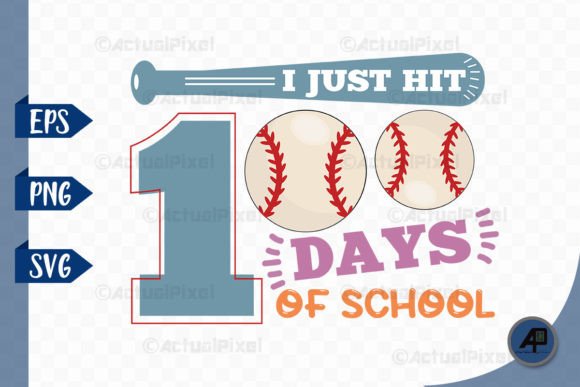
The visual personality of this design is celebratory yet structured. It captures the milestone energy of the 100th day of school without feeling cluttered. From an embroidery perspective, the bold shapes suggest excellent potential for an applique design or a combination of satin and fill stitches. The layout feels balanced, which is crucial when you are centering a design on a sweatshirt or tote bag. Unlike intricate illustrations that can become muddy when stitched, this SVG’s simplified geometry translates beautifully into a machine embroidery design. It has a modern, playful mood that appeals to parents and teachers alike, making it a strong candidate for seasonal inventory.
Real-World Application: The Custom Sweatshirt Test
To truly evaluate this asset, I mentally walked through a recent client project involving custom apparel for a second-grade class celebration. The goal was to create a commemorative sweatshirt that felt like a premium handmade product rather than a generic print. Using the I Tackled 100 Days of School Laser Svg as the foundation, I considered how it would perform on a mid-weight cotton fleece.
In this scenario, the design serves as an excellent centerpiece for sweatshirt embroidery. Because the original file is intended for laser cutting, the outer boundaries are precise. This allows for a clean tack-down stitch if you are using fabric applique, reducing the risk of fraying edges that often plague poorly digitized files. For a direct stitch version, the open spaces within the "100" numerals provide opportunities for creative thread colors or textured fill stitch patterns without creating excessive density. I envisioned pairing this with a simple running stitch border to frame the milestone, creating a finished look that justifies a higher price point for Etsy sellers and small shop owners. The clarity of the design ensures that even from a distance, the "100 Days" message is legible, which is vital for photo ops and classroom recognition.
Navigating Fabric Limitations and Hoop Constraints
While the I Tackled 100 Days of School Laser Svg is versatile, professional judgment requires acknowledging where it might struggle. Not every surface is suitable for this level of graphic detail. If you are planning baby embroidery on thin onesies or stretchy knit fabrics, caution is necessary. The design likely has enough stitch count to cause puckering on lightweight materials unless you use a heavy-duty stabilizer and potentially a topping.
Furthermore, consider your hoop size limitations. While the vector scales infinitely, embroidery does not. Shrinking this design down for a pocket logo or a cap requires careful editing. Tiny lettering or narrow internal details present in the original laser file may need to be simplified or removed entirely to prevent needle breaks and thread bunching. On textured fabrics like terry cloth towels or minky blankets, the crisp lines of the SVG might get lost. In these cases, I recommend increasing the column width of any satin stitch elements or adding a background base to lift the design above the fabric pile.
For commercial embroidery on dark garments, remember that the SVG itself does not carry color data. You must make intentional choices about contrast. A white outline or underlay may be necessary to ensure the design pops against navy or black sweatshirts. Always test on scrap fabric first; what looks perfect on screen can behave differently when needle penetrates multiple layers of stabilizer and garment.
Elevating Product Value and Brand Consistency
Using high-quality source material like the I Tackled 100 Days of School Laser Svg directly impacts customer trust. When a buyer receives a personalized gift or a boutique item, they notice the precision of the stitching. Clean vectors result in smoother stitch paths, fewer trims, and a more professional appearance. This attention to detail distinguishes a serious craft business from amateur hobbyists.
From a marketing perspective, this design is highly "mockup-friendly." Its bold, recognizable shape makes it easy to visualize in printable mockups for digital listings. Whether you are selling the physical finished product or licensing the digital embroidery file (if permitted), the design’s inherent balance helps create attractive listing photos. For Etsy sellers, consistency is key. Using a cohesive style of graphics across your 100-day collection builds brand recognition. This particular SVG fits well alongside other school-milestone assets, allowing you to bundle products or offer matching sets for siblings, thereby increasing average order value.
Essential Designer Notes Before You Stitch
Before loading this file into your machine or listing it in your shop, adhere to these practical checkpoints to ensure success:
- Verify Licensing: The product description highlights use for laser, CNC, Cricut, and Silhouette. It does not explicitly state embroidery commercial rights. Always confirm whether you can sell finished embroidered goods or the digitized file itself before starting production.
- Digitization Check: Remember that an SVG is a vector graphic, not a stitch file. You or a professional digitizer must convert this into a compatible embroidery file format (PES, DST, JEF, etc.). Do not assume auto-digitize features will respect the nuance of this specific layout.
- Density Assessment: Inspect the converted file for stitch density. Areas meant for laser engraving might be too dense for fabric. Adjust fill stitches to prevent bulletproof stiffness, especially on wearable custom apparel.
- Contrast Testing: Create black and white mockups to check value contrast. If the design relies solely on color differentiation, it may fail on monochromatic garments. Ensure the silhouette reads clearly regardless of thread hue.
- Stabilizer Selection: Match your stabilizer to the end use. Use cut-away for stretchy sweatshirts and tear-away for stable woven tote bags. For an embroidered patch, consider using heavy water-soluble stabilizer as a base.
- Detail Simplification: If resizing for small hoops, manually remove interior details smaller than 2mm. Laser precision does not equal embroidery feasibility at micro-sizes.
- Washability Test: If creating items like tea towels or baby bibs that require frequent laundering, test wash a sample. Ensure the stitch type holds up to agitation and that the design doesn't distort the fabric grain over time.
Final Verdict for Makers and Sellers
The I Tackled 100 Days of School Laser Svg represents a valuable asset for the prepared embroiderer. Its origins in laser and vector design provide a structural advantage that many standard clipart files lack. For creative entrepreneurs and makers, it offers a solid foundation for celebrating a major academic milestone. However, its success lies entirely in the translation process. By respecting the differences between cutting lines and stitch paths, testing thoroughly on your target substrates, and verifying usage rights, you can transform this digital graphic into a best-selling holiday embroidery staple or a cherished classroom keepsake. Approach it with technical mindfulness, and it will serve your business beautifully.