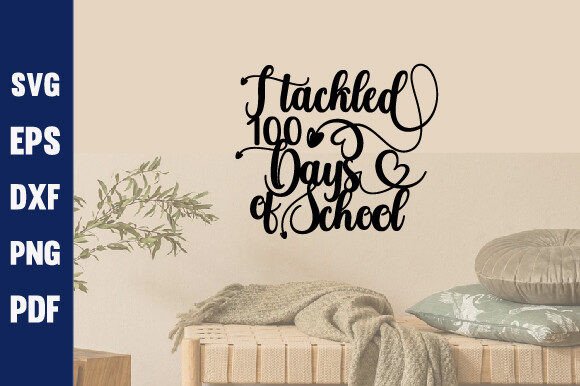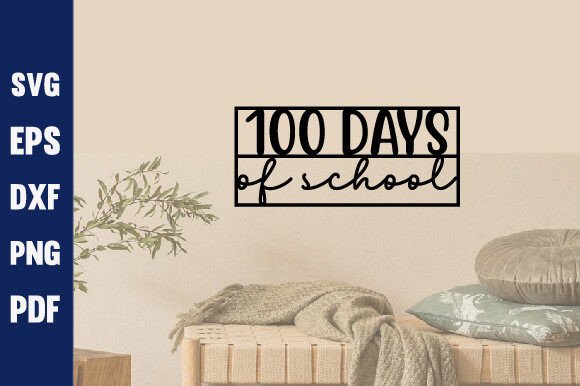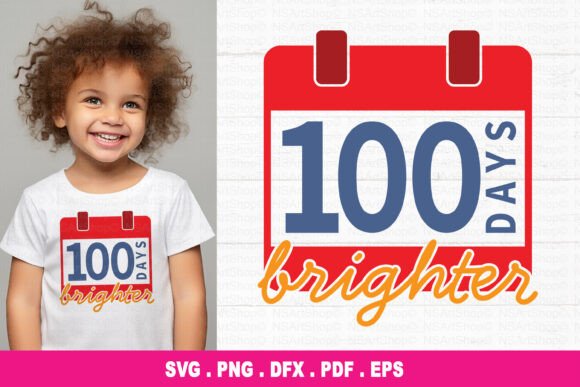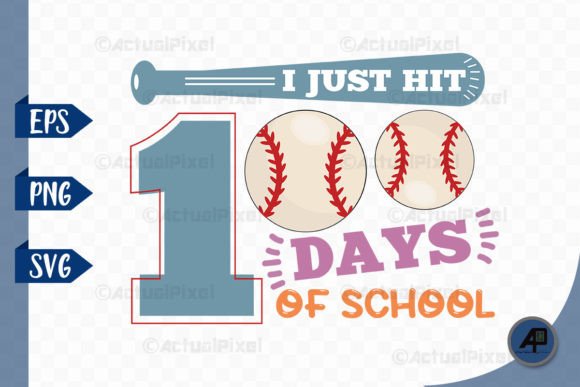
Happy 100 Days of School Laser SVG Review
As a designer who bridges the gap between digital graphics and tangible textiles, I approach every new file with a specific question: will this actually stitch well? When I first opened the Happy 100 Days of School Laser Svg, my immediate assessment was framed through the lens of vector precision. While this product is explicitly marketed as a perfect vector file for laser cutting, engraving, CNC router machines, Cricut, and Silhouette cutting, experienced makers know that clean vectors are often the secret foundation of superior machine embroidery design. In the world of Crafts and Graphics, versatility is king, but only if the geometry holds up when translated from screen to fabric.
First Impressions: Vector Clarity Meets Stitch Potential
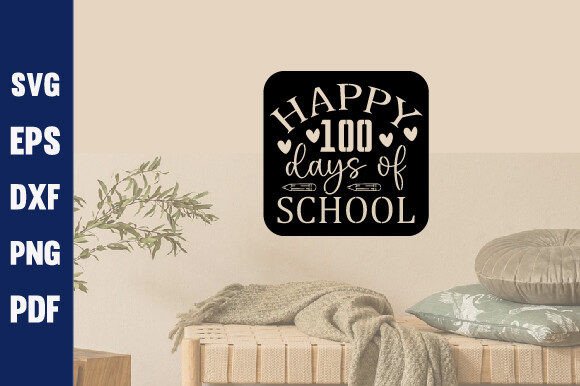
The visual personality of this design strikes a balance between celebratory whimsy and structured clarity, which is exactly what you need for school milestones. The layout feels intentional rather than cluttered. For an embroidery digitizer or a crafter converting vectors to stitches, this lack of unnecessary noise is a massive advantage. The lines are distinct, suggesting that if you were to create an applique design based on this graphic, the registration would be straightforward. The mood is undeniably cheerful, making it an instant candidate for classroom celebrations, teacher gifts, or student keepsakes. However, because this is originally a laser and cutting file, the "embroidery readiness" depends entirely on how you interpret these clean lines into satin stitch, fill stitch, or running stitch elements during your digitizing or conversion process.
Real-World Application: The Custom Sweatshirt Test
To truly evaluate this asset, I mentally placed it into a real-life production scenario: creating a custom sweatshirt for a third-grade class celebrating their 100th day. This is a high-stakes project where readability and durability matter more than intricate artistic flair. In this context, the Happy 100 Days of School Laser Svg shines as a blueprint for bold, legible typography and iconic shapes. Sweatshirt embroidery requires designs that can withstand the texture of fleece without getting lost. Because the source vector is optimized for laser cutting, the shapes likely possess smooth curves and defined corners, which translates beautifully to column stitches or edge-run appliques on heavier fabrics.
For an Etsy seller or small shop product creator, this design offers excellent commercial embroidery potential. It is specific enough to target a niche seasonal buyer yet generic enough to be personalized with names or year dates. If you are producing tote bag designs or embroidered patches for school events, the scalable nature of this vector means you can resize the artwork without losing integrity before you even begin thinking about stitch density. This adaptability is crucial for maintaining brand consistency across different merchandise types, from baby embroidery on onesies to larger holiday embroidery on wall hangings.
Navigating Fabric Constraints and Hoop Limitations
Despite its clean aesthetic, using this design requires practical caution regarding fabric texture and garment construction. Since the original file is intended for rigid materials like wood or acrylic via CNC and laser, the details might be finer than what standard embroidery thread can handle on stretchy knits. When planning a sweatshirt embroidery project or custom apparel, you must assess whether the smallest elements in the design will survive the pull of the fabric. Tiny lettering or intricate internal cutouts meant for laser engraving may need to be simplified or thickened to prevent thread breaks or poor coverage.
Hoop size is another critical variable. A design optimized for a 12x24 inch laser bed does not automatically fit a standard 5x7 embroidery hoop. You may need to separate the design elements or rearrange the layout to accommodate smaller hoops without distorting the proportions. Furthermore, consider the stabilizer requirements. If you are adapting this for a lightweight tea towel or a stretchy t-shirt, the structural integrity of the vector must be supported by appropriate backing to prevent puckering. On dark fabrics, ensure the design has enough open space or contrast; dense fill areas derived from laser vectors can sometimes become bulletproof and stiff if not managed with proper underlay and stitch direction planning.
Elevating Product Value and Customer Trust
Using a high-quality vector source like the Happy 100 Days of School Laser Svg directly impacts the perceived value of your finished product. Customers can tell the difference between a pixelated, auto-digitized mess and a crisp, professionally executed motif. When the edges of your applique are sharp and the text alignment is perfect, it builds customer trust and encourages repeat business. For digital product sellers offering printable mockups or design assets, this file serves as a reliable base for creating realistic previews that accurately represent what the final handmade product will look like.
In the competitive landscape of personalized gifts and boutique branding, professionalism is your currency. A clean execution of this design signals that you understand both the art and the engineering of embroidery. Whether you are selling a physical item at a craft fair or a digital embroidery file online, the clarity of the underlying graphics ensures that your work stands out. It transforms a simple school celebration into a polished, memorable keepsake that parents and teachers are proud to display.
Essential Designer Notes for Safe Execution
Before you commit this design to fabric or list it in your shop, adhere to these professional best practices to ensure success:
- Verify Licensing Terms: Since this is marketed primarily for laser and cutting, confirm whether the license permits commercial embroidery use or modification for stitch files before selling finished products.
- Test on Scrap Fabric First: Never run a new adaptation directly on a client’s garment. Test the stitch density and registration on a similar fabric weight to check for gaps or distortion.
- Check Thread Color Contrast: Review the design in black and white mockups to ensure the hierarchy of information remains clear regardless of color choices.
- Assess Small Details: Inspect any text or fine lines. If they are thinner than 1mm in the vector, they may require manual adjustment to function as valid stitch paths.
- Confirm Hoop Compatibility: Measure the design dimensions against your available hoop sizes before purchasing or digitizing to avoid resizing issues later.
- Evaluate Stabilizer Needs: Match your stabilizer choice to the specific fabric you are using, keeping in mind that laser-optimized vectors may have different density requirements than native embroidery files.
- Review Washability: If the item will be laundered frequently (like baby clothes or aprons), ensure all elements are securely anchored and not reliant solely on adhesive or temporary basting.
The Happy 100 Days of School Laser Svg represents a fantastic opportunity for cross-medium creativity. By respecting its origins as a precision vector while applying thoughtful embroidery techniques, you can transform this digital asset into a standout textile product. Whether you are crafting a single personalized gift or scaling up for a seasonal collection, the key lies in treating the file not just as an image, but as a technical blueprint for thread. With careful testing and mindful adaptation, this design can become a staple in your creative toolkit, bridging the gap between modern digital fabrication and traditional needlecraft excellence.