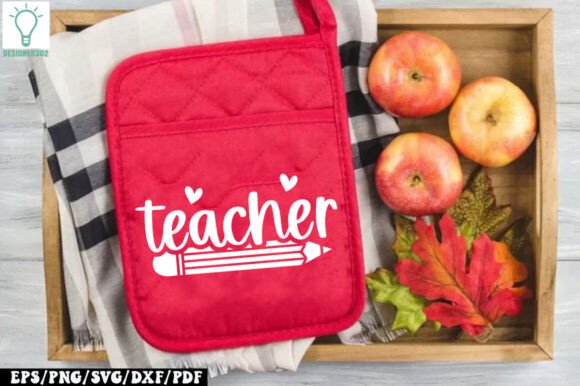
Teacher Pot Holder SVG: A Designer’s Stitch Review
When evaluating digital assets for physical production, there is often a disconnect between what looks good on a screen and what actually translates to thread. As a designer who regularly bridges the gap between digital graphics and tangible handmade products, I approach every new file with a healthy dose of skepticism. My latest test subject was the Teacher Pot Holder SVG, a design that promises versatility across both cutting machines and embroidery hoops. After putting this graphic through a real-world workflow for a client’s end-of-year teacher appreciation line, here is my honest assessment of its performance, aesthetic value, and practical application for fellow makers and shop owners.
First Impressions and Visual Personality
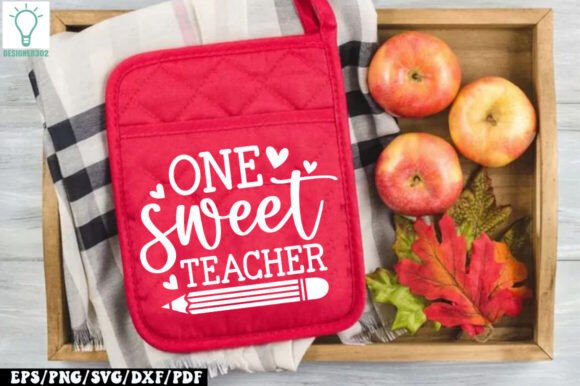
Opening the zipped folder, the immediate strength of this Teacher Pot Holder SVG is its clean vector architecture. In the realm of Crafts and Graphics, many school-themed designs suffer from excessive detail that turns into a muddy mess when stitched. This design, however, respects the limitations of thread. The visual mood is nostalgic yet modern, striking a balance that appeals to both veteran educators and new teachers setting up their first classrooms. The layout feels intentional for kitchen textiles, with proportions that naturally suit a square or rectangular canvas without requiring excessive resizing.
For an embroidery designer, the separation of elements is crucial. I was pleased to see distinct layers that allow for easy color sorting. Whether you are using this as a pure vinyl cut for Cricut Design Space or converting it for needle and thread, the silhouette holds up. It possesses enough visual weight to stand alone on a pot holder but remains open enough to accommodate personalization, such as a teacher's name or school year, without feeling overcrowded.
Real-World Application: The Teacher Appreciation Tote
To truly test this machine embroidery design, I moved beyond the standard pot holder application. I had a commission for a batch of custom canvas tote bags intended as gifts for a local elementary school staff. While the product title suggests kitchen use, the graphic’s scalability made it a prime candidate for a tote bag design. I utilized the included EPS and PDF formats to verify dimensions before importing the SVG into my digitizing software to create a custom embroidery file.
The result was surprisingly professional. On unbleached canvas, the design provided excellent contrast. Because the original SVG features bold, readable shapes, the converted satin stitch borders remained crisp even at a larger scale. This is where many school-themed files fail; they become jagged or lose definition when enlarged. This Teacher Pot Holder SVG maintained its integrity, resulting in a finished product that looked like high-end boutique merchandise rather than a homemade craft. For Etsy sellers or small shop owners, this reliability is paramount. Customers trust products that look polished, and this graphic provides a solid foundation for that level of quality.
Technical Performance Across Different Media
Versatility is the hallmark of a valuable digital asset. While I tested this primarily for embroidery, its native format shines for vinyl and HTV applications. The inclusion of DXF and PNG formats ensures compatibility with Silhouette Designer and other cutting platforms. For those creating layered iron-on designs for sweatshirt embroidery or custom apparel, the nodes are clean, meaning less weeding time and smoother cuts.
However, if you are adapting this specifically for needlework, pay attention to stitch density. The design works beautifully as an applique design, where fabric pieces form the main body and stitches secure the edges. If attempting a full fill stitch version, be mindful of fabric texture. On smooth cotton or linen tea towels, the design renders perfectly. On heavier textures like terry cloth or waffle weave, the finer details may get lost unless you increase the underlay or adjust the pull compensation in your digitizing software. Always treat the SVG as a blueprint for embroidery rather than a direct stitch file unless you have verified its digitized parameters.
Navigating Fabric Challenges and Hoop Limitations
No design is immune to the laws of physics, and this Teacher Pot Holder SVG requires thoughtful placement depending on your substrate. During my testing, I noted specific areas where caution is necessary:
- Stretchy Fabrics: If applying this to a jersey knit baby item or stretchy t-shirt, the design’s structured lines can distort. Use a high-quality cut-away stabilizer and consider adding a light topping to prevent stitches from sinking into the fabric pile.
- Small Hoop Sizes: While scalable, reducing this design too much for a 4x4 hoop size risks compromising tiny lettering or intricate corners. If your hoop is limited, simplify the design by removing peripheral elements rather than shrinking the entire graphic below its legible threshold.
- Dark Fabrics: The design relies on shape definition. On dark backgrounds, ensure your thread colors offer sufficient contrast. A white running stitch outline on black fabric reads differently than on white. Test on scrap fabric first to confirm visibility.
- Curved Surfaces: For cap embroidery or curved pouches, the flat geometry of the SVG may need distortion correction. What looks straight on screen may bow on a curved surface. Adjust your digitizing to account for the curve before stitching.
Elevating Product Value and Brand Consistency
For creative entrepreneurs, the choice of design assets directly impacts perceived value. Using a well-proportioned, clean graphic like this Teacher Pot Holder SVG signals professionalism. When listing items online, the clarity of the design translates to better printable mockups and digital product previews. Buyers can clearly see what they are purchasing, which reduces hesitation and returns.
Furthermore, this design supports brand consistency. Its balanced aesthetic allows it to pair well with other items in a School SVG Bundle or Kitchen SVG Download. Creating cohesive collections is easier when individual assets share a similar visual language. Whether you are selling the finished embroidered patch, the personalized gift, or the digital embroidery file itself, maintaining this level of visual coherence builds customer recognition and loyalty over time.
Essential Designer Notes Before You Stitch
Before committing this design to a final project or commercial listing, run through this practical checklist. These steps save time, materials, and reputation:
- Verify Licensing: Confirm whether your purchase includes commercial rights for selling finished products or digital files. Never assume usage terms based on the file type alone.
- Test Stitch on Scrap: Always run a test on the exact fabric and stabilizer combination you plan to use. Check for puckering, registration issues, or thread breaks.
- Check Thread Color Contrast: View your thread selection in natural light. Colors that look distinct on a monitor may blend together in thread form, especially in satin stitch areas.
- Inspect Small Details: Zoom in on the SVG to identify any elements smaller than 2mm. These will likely need to be removed or resized for successful embroidery.
- Mockup in Black and White: This reveals value contrast independent of color. If the design reads well in grayscale, it will be visually strong in any colorway.
- Confirm Format Compatibility: Ensure the SVG, DXF, PNG, EPS, or PDF format you intend to use is fully supported by your specific machine or software version.
The Teacher Pot Holder SVG is more than just a seasonal graphic; it is a functional design asset that respects the maker’s process. By understanding its strengths and respecting its technical requirements, you can transform this digital file into heirloom-quality kitchen textiles, cherished teacher gifts, and profitable shop inventory. Approach it with the same care you give your stitching, and it will serve your business and creativity well.